Withdrawal Identity Checks: How Account, ID and Wallet Details Must Match
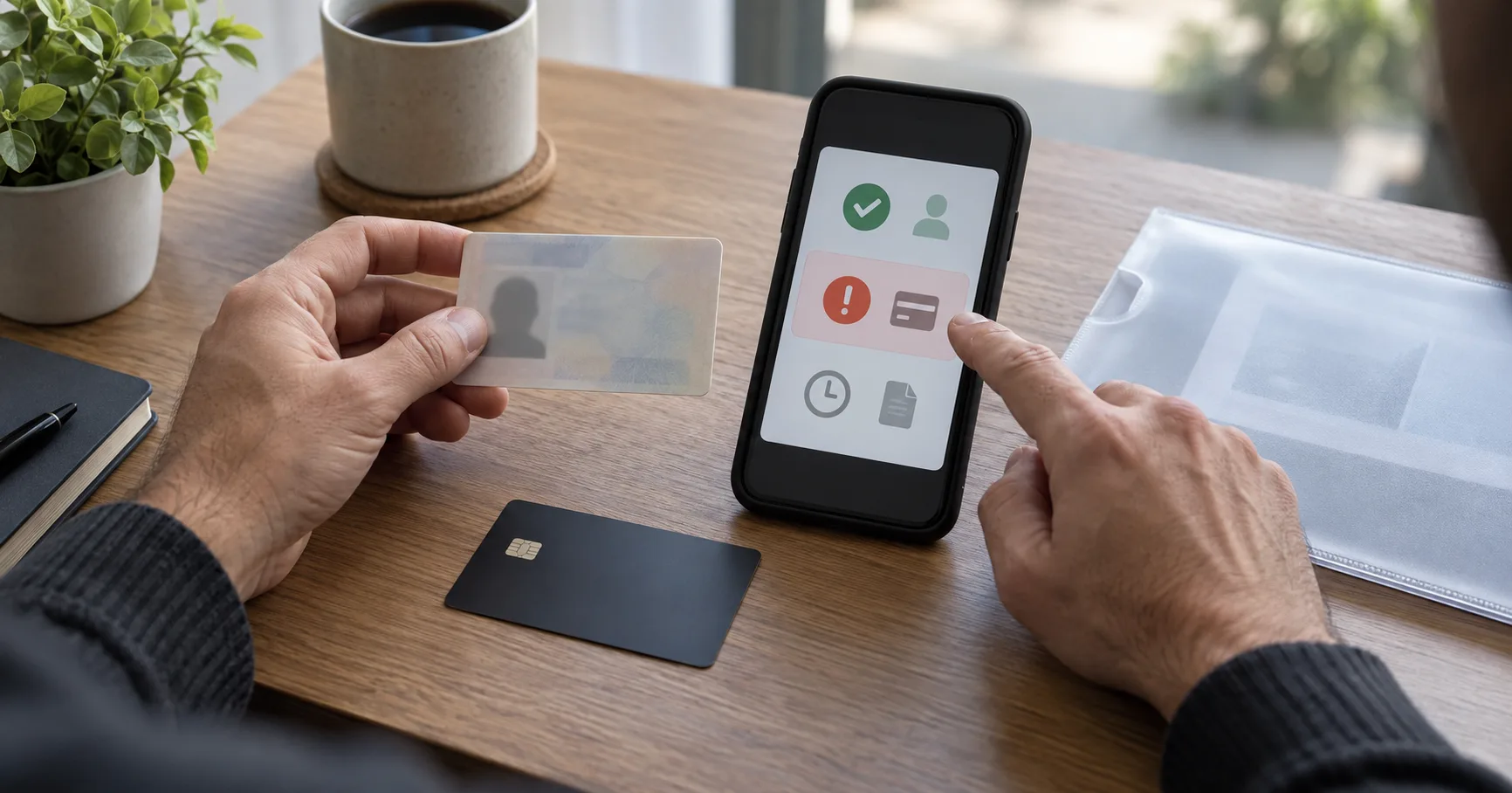
The condition many players misunderstand is simple: choosing a familiar payment channel does not replace identity verification. A Withdrawal can still stop when the registered name, submitted document and receiving account describe different people.
This matters to a weekend player because verification problems often begin during registration, several sessions before the first cash-out request. The useful question is not merely whether an ID looks valid. It is whether every record supports the same identity, ownership and payment trail.
Three records must describe one person
A typical review compares three separate records. The account profile says who registered, the documents provide evidence for that identity, and the payment destination identifies who should receive the funds. A match across all three gives the request a coherent ownership trail.
The payment brand alone cannot resolve an ownership conflict. A properly named GCash or Maya account is more useful than either channel registered to somebody else.
Build a consistent account record from the start
Registration is the first part of Withdrawal preparation. Entering convenient shorthand may save seconds, but it can create an extra review when the document later shows a longer legal name.
Copy the full legal name from the document you expect to submit, including every middle name that appears on its face.
Enter the birth date carefully and compare all three components before continuing, because one transposed digit creates a different identity record.
Use a mobile number and email address that you control, since either may receive security prompts or account-related messages.
Record the current residential address in a consistent format, especially when a later review could request separate address evidence.
Complete the first Login from your usual device and protect the account credentials from relatives, friends and shared-device users.
The goal is consistency, not cosmetic perfection. “Maria L. Santos” and “Maria Lourdes Santos” may refer to one person, but an automated comparison may not treat them as identical. If a form permits the complete version, the complete version creates the cleaner record.
Match each document to the fact it must prove
Identity evidence and address evidence answer different questions. A passport, driver's license or PhilSys ID may display a name and photograph, while a bank statement, utility bill or account statement may help establish an address. The actual accepted set depends on the operator's displayed requirements, so players should check those instructions before uploading anything.
Choose an identity document whose legal name and birth date match the registration profile without unexplained spelling or sequence differences.
Photograph the entire document on a plain surface, keeping all four edges visible and avoiding glare across security features or printed fields.
Use a recent address record only when requested, and confirm that its name and address agree with the profile being reviewed.
Prepare a live selfie or document-holding image if the process requests one, because possession of a copied card proves less than live control.
Submit original, unedited images in an accepted format instead of screenshots containing filters, annotations, borders or details from another application.
More documents are not automatically better. One clear accepted ID can beat three unclear files because every extra record introduces another name, address or date that might conflict. A second document becomes useful when it proves a separate condition or resolves a genuine discrepancy.
Payment ownership outweighs payment convenience
A wallet already used for everyday shopping may seem like the obvious destination, yet convenience loses its advantage when the wallet belongs to a spouse or parent. The stronger option is normally the channel whose ownership details align with the player profile.
This creates a real trade-off. Reusing the same personally owned channel can produce a simpler trail between funding and cash-out, while selecting another personally owned channel may offer better access or budgeting control. Neither option fixes a mismatched name.
Before choosing the destination, compare these conditions side by side:
The account holder name should correspond to the verified player rather than a household member who happens to control the mobile device.
The registered mobile number should still be active and accessible when confirmation prompts or account checks require direct control.
The requested PHP amount should remain within every limit displayed by both the operator and the selected payment service.
The destination should be selected from the options actually shown inside the authenticated account, not from instructions received through an unsolicited message.
Hypothetical example: tracing one PHP 1,500 request
Assumption: a player registers as “Ana Mae Cruz,” adds PHP 500 from a personally owned wallet, finishes a weekend session with PHP 1,700, and asks to withdraw PHP 1,500. These figures are illustrative, not Coral Vault terms or a real offer.

Start with the PHP 1,700 account balance and subtract the PHP 1,500 request, leaving PHP 200 if no separate condition changes the usable balance.
Compare “Ana Mae Cruz” on the profile with “Ana Mae Cruz” on the submitted ID; the exact match supports the identity condition.
Compare the wallet owner with the profile; “Ana M. Cruz” may require clarification because the middle name appears only as one initial.
Check the uploaded image independently; if one of four document edges is cropped, a name match cannot repair the incomplete evidence.
Correct the failing condition rather than changing the PHP 1,500 amount, because reducing it to PHP 1,000 does not resolve an identity mismatch.
The arithmetic determines what remains in the account, but it does not determine whether verification succeeds. Approval depends on the evidence chain. In this example, the player can predict that the review turns on the abbreviated wallet name and document image, not the requested sum.
Fast preparation versus reactive verification
A prepared player checks the profile, ID and wallet before building a withdrawable balance. This option takes a few minutes earlier, but it exposes spelling differences while there is no pending request competing for attention.
Reactive verification begins only after a cash-out prompt appears. It can still work, especially when every record already matches, but it leaves less room to replace a poor photograph or recover access to an old number. During the Philippine “-ber months,” busy family schedules make that difference more noticeable for weekend players.
Preparation wins when documents or payment details have changed. Reactive completion remains reasonable when the requested steps are clear, the player controls every account, and the available evidence already agrees.
Read a failed check as a specific condition
A rejection or resubmission prompt should be treated as evidence that one condition remains unproved. Randomly replacing every file can hide the original problem and create additional inconsistencies.
Recheck spelling, name order, birth date and address before assuming the payment channel itself caused the unsuccessful review.
Replace a blurred or cropped image with a fresh photograph that shows the complete document under even, neutral lighting.
Confirm that the chosen wallet belongs to the registered player before attempting another request through the same destination.
Use the operator's stated support route when the records genuinely match, preserving the request reference and any non-sensitive error message.
The mechanism is predictable: registration creates the identity record, documents support its claims, and the payment account completes the ownership trail. When those three layers agree, the player has addressed the central verification conditions. When they do not, changing the cash-out amount or wallet brand cannot substitute for correcting the mismatch.